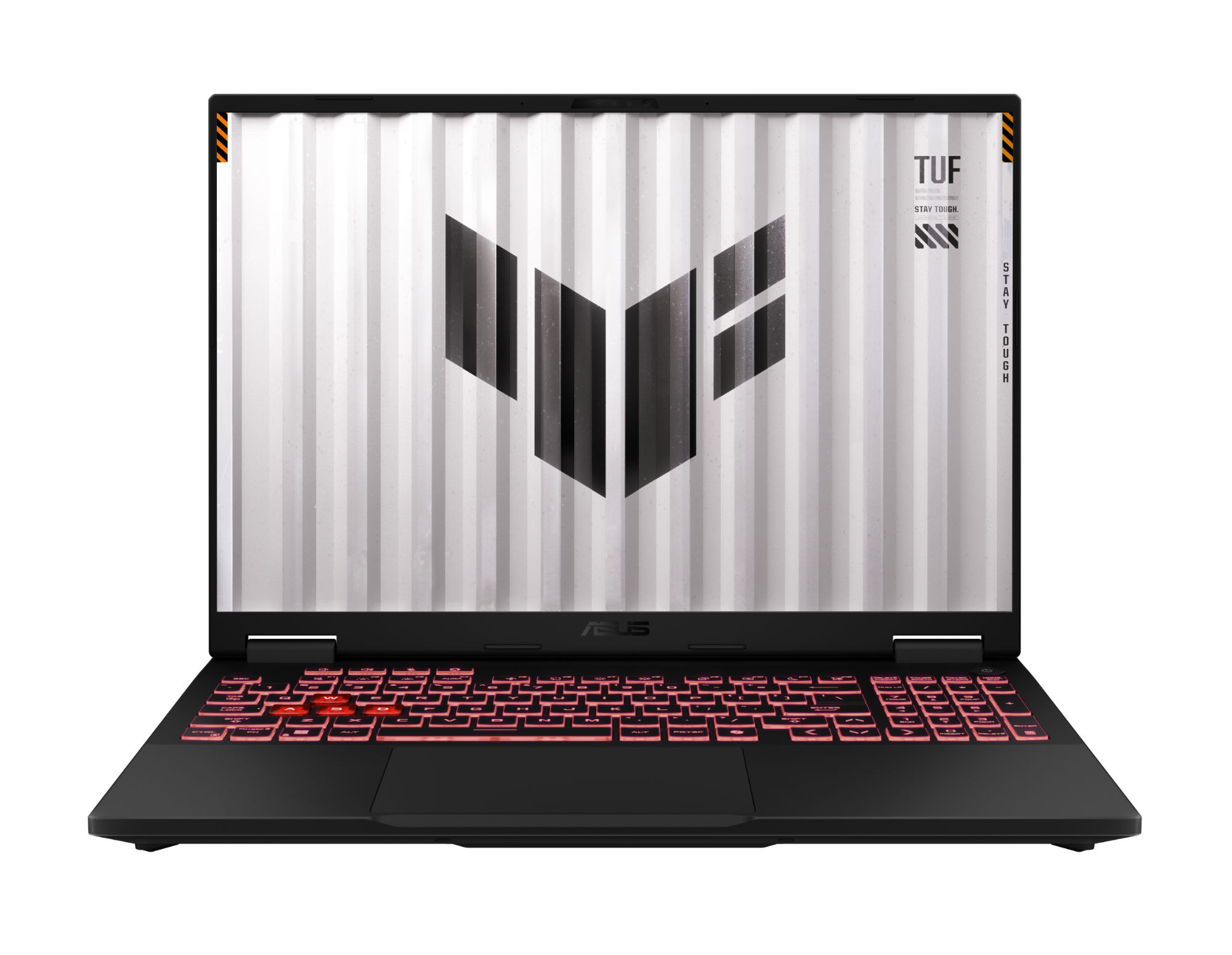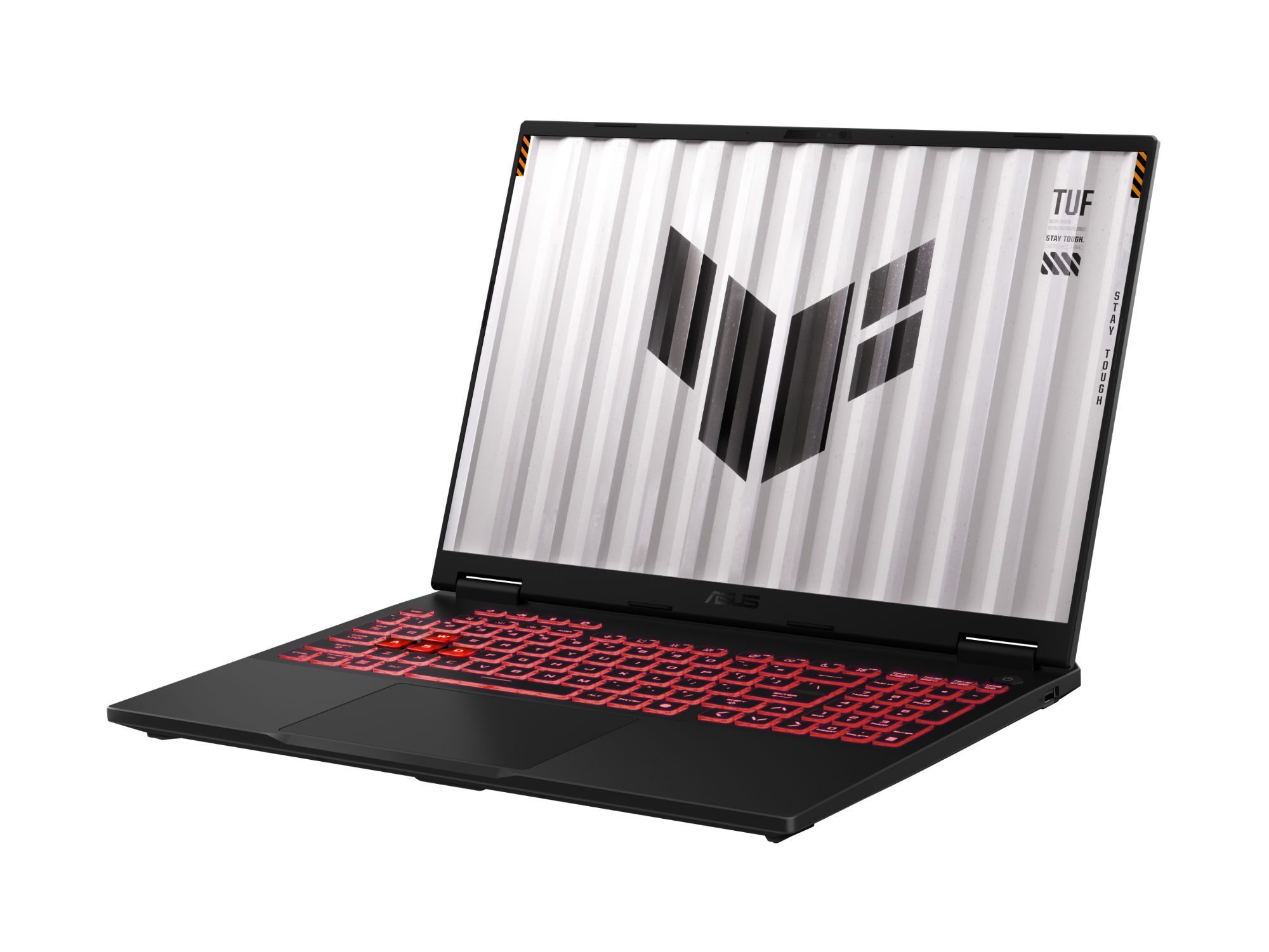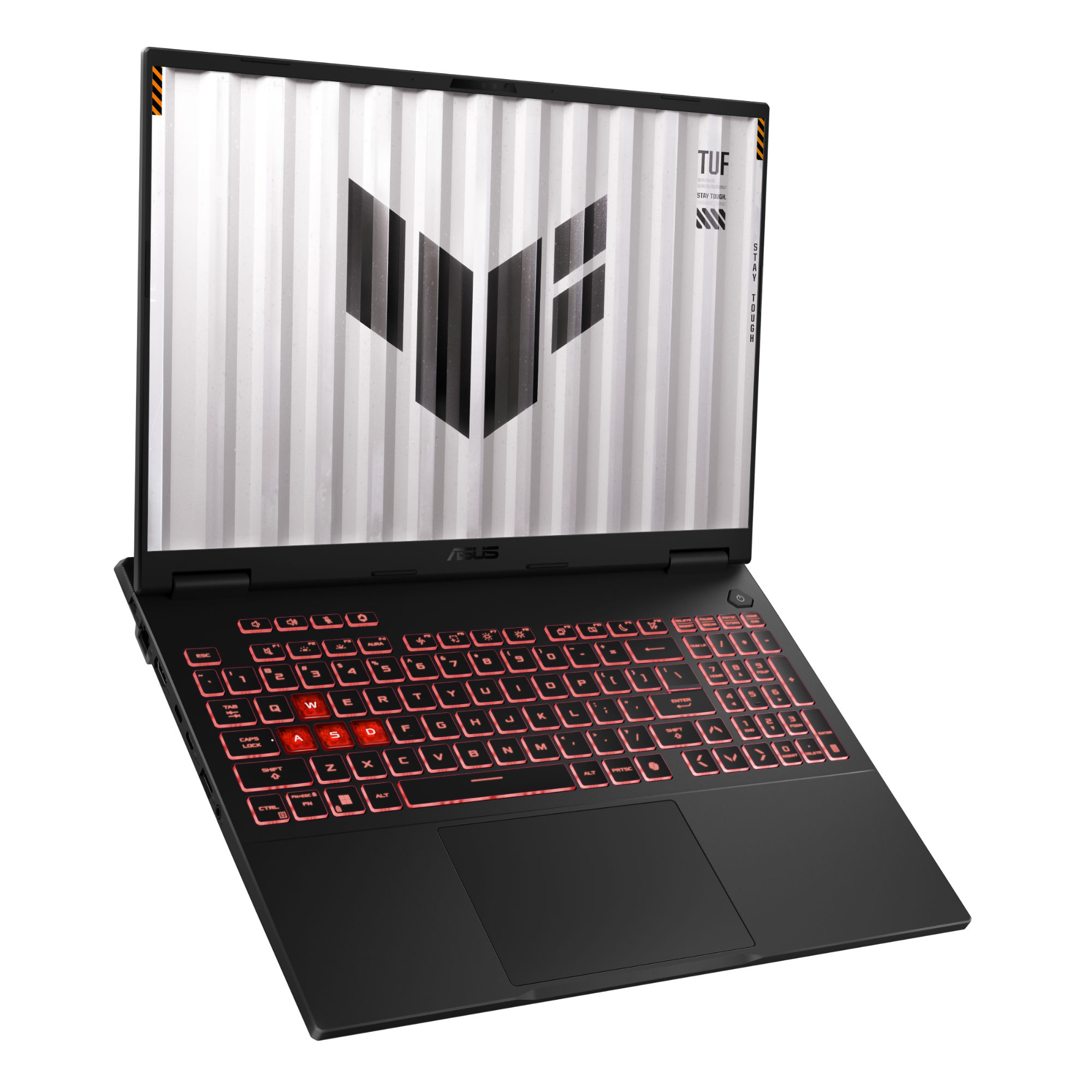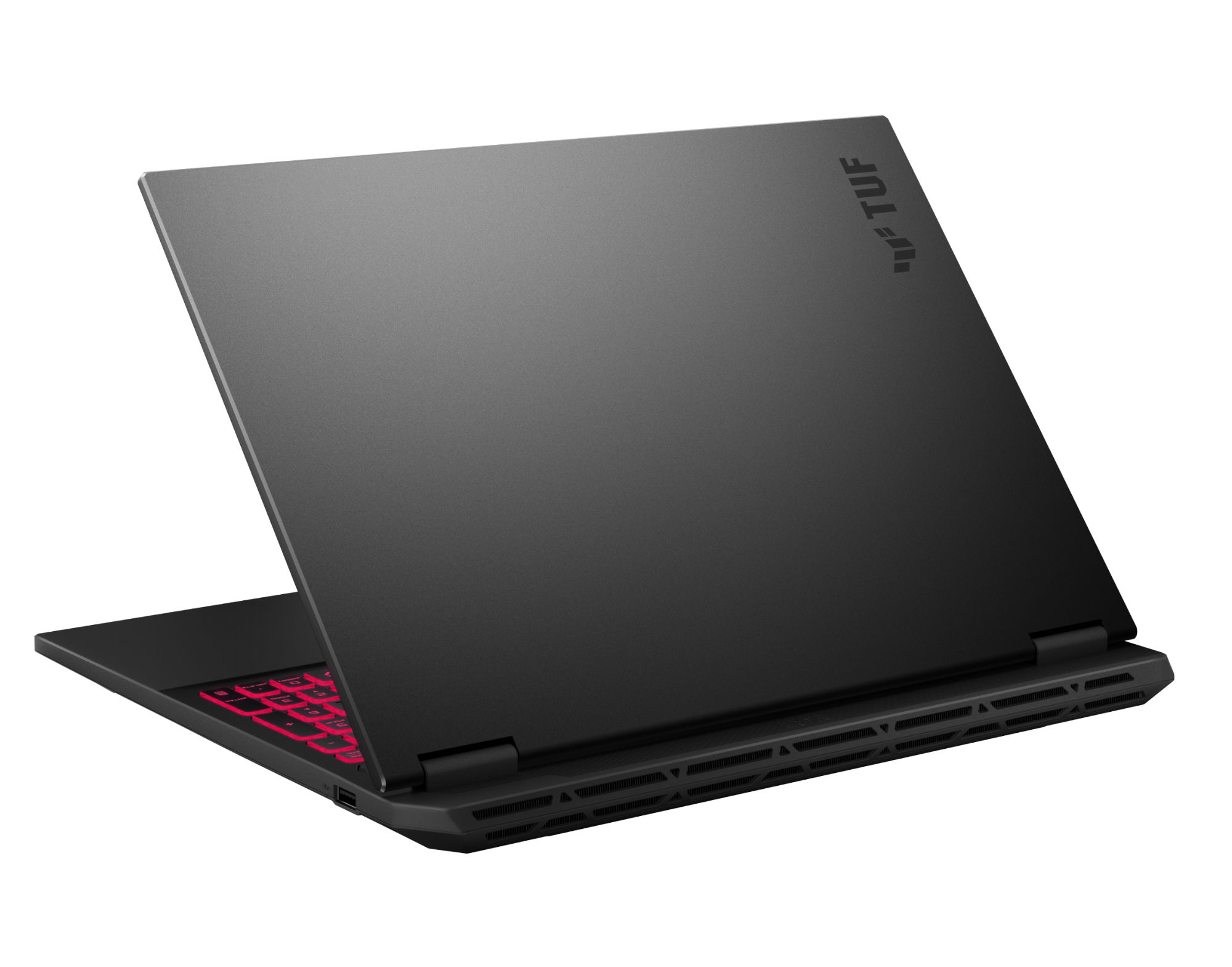


- Écran 16.0" LCD - IPS (anti-reflets) 165 Hz
- Résolution QHD 2560 x 1600 pixels (16/10)
- Sans système
- AMD Ryzen 7 260 (8 coeurs x 5.10 GHz)
- Nvidia RTX 5050 (mobile) (8 Go)
- 16 Go DDR5 - 5600 MHz
- 512 Go (SSD M.2 PCI-e 4.0)
- Voir les caractéristiques complètes
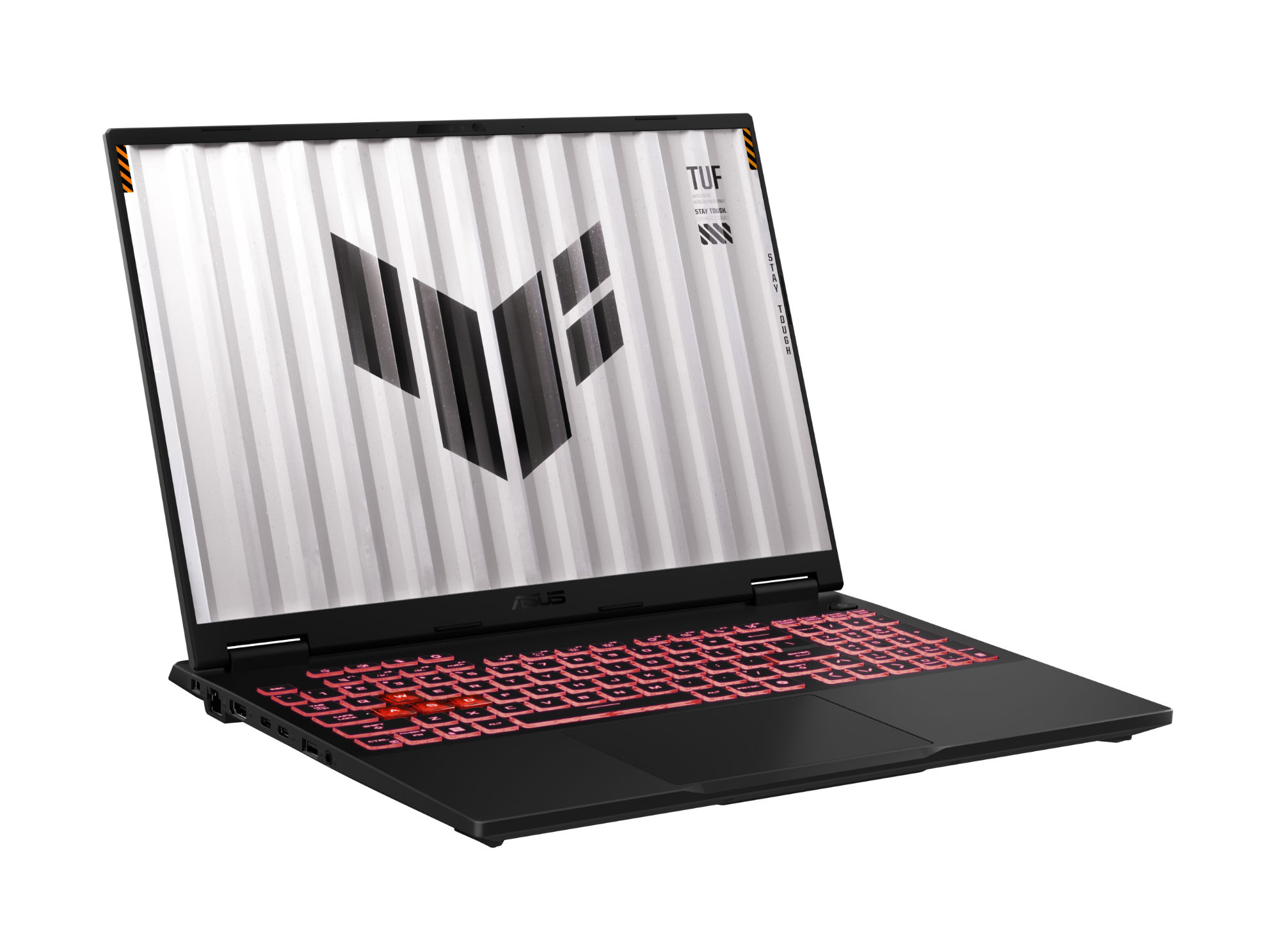
Prix de référence (mai 2025) : 1 284,00€
Dans la même gamme
-

Asus TUF Gaming A16 (2024) TUF617NS-RN3003
- Écran 16.0" LCD - IPS (anti-reflets) 165 Hz
- Résolution Full HD 1920 x 1200 pixels (16/10)
- Sans système
- AMD Ryzen 7 7435HS (8 coeurs x 4.50 GHz)
- AMD Radeon RX 7600S (8 Go)
- 16 Go DDR5 - 4800 MHz
- 512 Go (SSD M.2 PCI-e 4.0)
-

Asus TUF Gaming A16 (2024) FA608WI-QT012W
- Écran 16.0" LCD - IPS (anti-reflets) 165 Hz
- Résolution QHD 2560 x 1600 pixels (16/10)
- Windows 11 Famille
- AMD Ryzen AI 9 HX 370 (12 coeurs x 5.10 GHz)
- Nvidia GeForce RTX 4070 (Mobile) (8 Go)
Version : 2225 MHz / 140 W - 32 Go LPDDR5X - 7500 MHz
- 1 To (SSD M.2 PCI-e 4.0)
-

Asus TUF Gaming A16 (2024) TUF607NU-RL109 (Ryzen 5 / RTX 4050 / 16 Go / 512 Go / Sans OS)
- Écran 16.0" LCD - IPS (anti-reflets) 144 Hz
- Résolution Full HD 1920 x 1200 pixels (16/10)
- Sans système
- AMD Ryzen 5 7535HS (6 coeurs x 4.55 GHz)
- Nvidia GeForce RTX 4050 (Mobile) (6 Go)
Version : 1681 MHz / 140 W - 16 Go DDR5 - 4800 MHz
- 512 Go (SSD M.2 PCI-e 3.0)
-

Asus TUF Gaming A16 (2024) TUF608PP-DRFQT049W (Ryzen 9 / RTX 5070 / 16 Go / 1 To)
- Écran 16.0" LCD - IPS (anti-reflets) 165 Hz
- Résolution QHD 2560 x 1600 pixels (16/10)
- Windows 11 Famille
- AMD Ryzen AI 9 HX 370 (12 coeurs x 5.10 GHz)
- Nvidia GeForce RTX 5070 (mobile) (8 Go)
- 16 Go LPDDR5X - 7500 MHz
- 1 To (SSD M.2 PCI-e 4.0)
-

Asus TUF Gaming A16 (2024) TUF608PP-DRQT041W (Ryzen 9 / RTX 5070 / 16 Go / 1 To)
- Écran 16.0" LCD - IPS (anti-reflets) 165 Hz
- Résolution QHD 2560 x 1600 pixels (16/10)
- Windows 11 Famille
- AMD Ryzen AI 9 HX 370 (12 coeurs x 5.10 GHz)
- Nvidia GeForce RTX 5070 (mobile) (8 Go)
- 16 Go LPDDR5X - 7500 MHz
- 1 To (SSD M.2 PCI-e 4.0)
-

Asus TUF Gaming TUF607VU-RL021W
- Écran 16.0" LCD - IPS (anti-reflets) 144 Hz
- Résolution Full HD 1920 x 1200 pixels (16/10)
- Windows 11 Famille
- Intel Core 5 210H (8 coeurs x 4.80 GHz)
- Nvidia GeForce RTX 4050 (Mobile) (6 Go)
- 16 Go DDR5 - 5600 MHz
- 1 To (SSD M.2 PCI-e 4.0)
-

Asus TUF Gaming A16 (2024) TUF608UM-DRQT051W (Ryzen 7 / RTX 5060 / 32 Go / 1 To)
- Écran 16.0" LCD - IPS (anti-reflets) 165 Hz
- Résolution QHD 2560 x 1600 pixels (16/10)
- Sans système
- AMD Ryzen 7 260 (8 coeurs x 5.10 GHz)
- Nvidia RTX 5060 (mobile) (8 Go)
Version : 2547 MHz / 115 W - 32 Go DDR5 - 5600 MHz
- 1 To (SSD M.2 PCI-e 4.0)
-

Asus TUF Gaming A16 (2024) TUF608UM-DRQT050W (Ryzen 7 / RTX 5060 / 16 Go / 512 Go)
- Écran 16.0" LCD - IPS (anti-reflets) 165 Hz
- Résolution QHD 2560 x 1600 pixels (16/10)
- Sans système
- AMD Ryzen 7 260 (8 coeurs x 5.10 GHz)
- Nvidia RTX 5060 (mobile) (8 Go)
Version : 2547 MHz / 115 W - 16 Go DDR5 - 5600 MHz
- 512 Go (SSD M.2 PCI-e 4.0)
-

Asus TUF Gaming A16 (2024) TUF608UM-DRFQT060W (Ryzen 7 / RTX 5060 / 16 Go / 512 Go)
- Écran 16.0" LCD - IPS (anti-reflets) 165 Hz
- Résolution QHD 2560 x 1600 pixels (16/10)
- Sans système
- AMD Ryzen 7 260 (8 coeurs x 5.10 GHz)
- Nvidia RTX 5060 (mobile) (8 Go)
Version : 2547 MHz / 115 W - 16 Go DDR5 - 5600 MHz
- 512 Go (SSD M.2 PCI-e 4.0)
-

Asus TUF Gaming A16 (2024) TUF608JMR-RV056W (Core i7 / RTX 5060 / 16 Go / 1 To)
- Écran 16.0" LCD - IPS (anti-reflets) 165 Hz
- Résolution Full HD 1920 x 1200 pixels (16/10)
- Windows 11 Famille
- Intel Core i7-14650HX (16 coeurs x 5.20 GHz)
- Nvidia RTX 5060 (mobile) (8 Go)
Version : 2547 MHz / 115 W - 16 Go DDR5 - 5600 MHz
- 1 To (SSD M.2 PCI-e 4.0)
-

Asus TUF Gaming A16 (2024) A16 608UH-RV053W (Ryzen 7 / RTX 5060 / 16 Go / 512 Go)
- Écran 16.0" LCD - IPS (anti-reflets) 165 Hz
- Résolution Full HD 1920 x 1200 pixels (16/10)
- Windows 11 Famille
- AMD Ryzen 7 260 (8 coeurs x 5.10 GHz)
- Nvidia RTX 5060 (mobile) (8 Go)
Version : 2547 MHz / 115 W - 16 Go DDR5 - 5600 MHz
- 512 Go (SSD M.2 PCI-e 4.0)
-

Asus TUF Gaming A16 (2024) TUF608JMR-RV095W (Core i7 / RTX 5060 / 32 Go / 512 Go)
- Écran 16.0" LCD - IPS (anti-reflets) 165 Hz
- Résolution Full HD 1920 x 1200 pixels (16/10)
- Windows 11 Famille
- Intel Core i7-14650HX (16 coeurs x 5.20 GHz)
- Nvidia RTX 5060 (mobile) (8 Go)
Version : 2547 MHz / 115 W - 32 Go DDR5 - 5600 MHz
- 512 Go (SSD M.2 PCI-e 4.0)
-

Asus TUF Gaming A16 (2024) TUF608PP-RV067W (Ryzen 9 / RTX 5070 / 32 Go / 1 To)
- Écran 16.0" LCD - IPS (anti-reflets) 165 Hz
- Résolution Full HD 1920 x 1200 pixels (16/10)
- Windows 11 Famille
- AMD Ryzen AI 9 HX 370 (12 coeurs x 5.10 GHz)
- Nvidia GeForce RTX 5070 (mobile) (8 Go)
- 32 Go LPDDR5X - 7500 MHz
- 1 To (SSD M.2 PCI-e 4.0)
-

Asus TUF Gaming A16 TUF608JH-RV073W
- Écran 16.0" LCD - IPS (anti-reflets) 165 Hz
- Résolution Full HD 1920 x 1080 pixels (16/9)
- Windows 11 Famille
- Intel Core i5-13450HX (10 coeurs x 4.50 GHz)
- Nvidia RTX 5050 (mobile) (8 Go)
- 16 Go DDR5 - 4800 MHz
- 512 Go (SSD M.2 PCI-e 4.0)
-

Asus TUF Gaming A16 (2024) TUF608UM-RV080W (Ryzen 7 / RTX 5060 / 16 Go / 512 Go)
- Écran 16.0" LCD - IPS (anti-reflets) 60 Hz
- Résolution Full HD 1920 x 1200 pixels (16/10)
- Windows 11 Famille
- AMD Ryzen 7 260 (8 coeurs x 5.10 GHz)
- Nvidia RTX 5060 (mobile) (8 Go)
- 16 Go DDR5 - 5600 MHz
- 512 Go (SSD M.2 PCI-e 4.0)
Suggestions
-

LG 32GX850A-B
- Écran gaming 32.0" OLED
- Résolution 4K UHD 3840 x 2160 pixels (16/9)
- 165 Hz
- 250 cd/m²
- Ajustable en hauteur. Inclinable. Rotatif horizontalement. Pivotant verticalement.
- AMD FreeSync Premium Pro, HDR10, Nvidia G-Sync, TÜV Rheinland Flicker Free, TÜV Rheinland Low Blue Light
-

LG 34U650A-B
- Écran bureautique / multimédia gaming 34.0" LCD - IPS
- Résolution QHD+ 3440 x 1440 pixels (21/9)
- 100 Hz
- 300 cd/m²
- Incurvé 3800 R
- Ajustable en hauteur. Inclinable. Rotatif horizontalement.
- HDR10, TÜV Rheinland Flicker Free, VESA DisplayHDR 400
-

Samsung Odyssey G8 G81SF LS27FG810SUXEN
- Écran gaming 27.0" OLED
- Résolution 4K UHD 3840 x 2160 pixels (16/9)
- 240 Hz
- 250 cd/m²
- Ajustable en hauteur. Inclinable. Rotatif horizontalement. Pivotant verticalement.
- AMD FreeSync Premium Pro, HDR10+ Gaming, Nvidia G-Sync, TÜV Rheinland Flicker Free, VESA DisplayHDR 400 True Black
-

Lenovo Legion 27Q-10 (68CFGACBEU)
- Écran gaming 26.5" OLED
- Résolution QHD 2560 x 1440 pixels (16/9)
- 280 Hz
- 250 cd/m²
- Ajustable en hauteur. Inclinable. Rotatif horizontalement. Pivotant verticalement.
- AMD FreeSync Premium Pro, Eyesafe Certified, TÜV Rheinland Low Blue Light, VESA Adaptive-Sync, VESA ClearMR
-

Lenovo Legion Pro 32UD-10 (69D0GACBEU)
- Écran gaming 31.5" OLED
- Résolution 4K UHD 3840 x 2160 pixels (16/9)
- 240 Hz
- 250 cd/m²
- Incurvé 800 R
- Ajustable en hauteur. Inclinable. Rotatif horizontalement.
- AMD FreeSync Premium Pro, Eyesafe Certified, HDR10, TÜV Rheinland Eye comfort, TÜV Rheinland Flicker Free
-

Samsung Odyssey G50SF QHD 180Hz
- Écran gaming 27.0" OLED
- Résolution QHD 2560 x 1440 pixels (16/9)
- 180 Hz
- 200 cd/m²
- Inclinable.
- AMD FreeSync, HDR10, Nvidia G-Sync, TÜV Rheinland Flicker Free
-

Asus ROG Strix XG27ACMEG-G Hatsune Miku Edition
- Écran gaming 27.0" Fast IPS
- Résolution QHD 2560 x 1440 pixels (16/9)
- 250 Hz
- 400 cd/m²
- Ajustable en hauteur. Inclinable. Rotatif horizontalement. Pivotant verticalement.
- AMD FreeSync Premium, HDR10, Nvidia G-Sync, TÜV Rheinland Flicker Free, TÜV Rheinland Low Blue Light
-

Samsung Odyssey G7 G75F LS40FG756EUXEN
- Écran gaming 40.0" VA
- Résolution 5K 5120 x 2160 pixels (21/9)
- 180 Hz
- 350 cd/m²
- Incurvé 1000 R
- Ajustable en hauteur. Inclinable. Rotatif horizontalement.
- AMD FreeSync Premium Pro, TÜV Rheinland Flicker Free, VESA DisplayHDR 600
-

Samsung Odyssey G60SF QHD 500Hz
- Écran gaming 27.0" OLED
- Résolution QHD 2560 x 1440 pixels (16/9)
- 500 Hz
- 300 cd/m²
- Ajustable en hauteur. Inclinable. Rotatif horizontalement. Pivotant verticalement.
- AMD FreeSync Premium Pro, Nvidia G-Sync, TÜV Rheinland Flicker Free, VESA DisplayHDR 500 True Black
-

LG 34GX900A-B
- Écran gaming 34.0" OLED
- Résolution QHD+ 3440 x 1440 pixels (21/9)
- 240 Hz
- 275 cd/m²
- Incurvé 800 R
- Ajustable en hauteur. Inclinable. Rotatif horizontalement.
- AMD FreeSync Premium Pro, HDR10, Nvidia G-Sync, TÜV Rheinland Flicker Free, VESA Adaptive-Sync
Note
Cette note est calculée en fonction des performances du PC et de son prix de vente.
6.4 / 10Performances
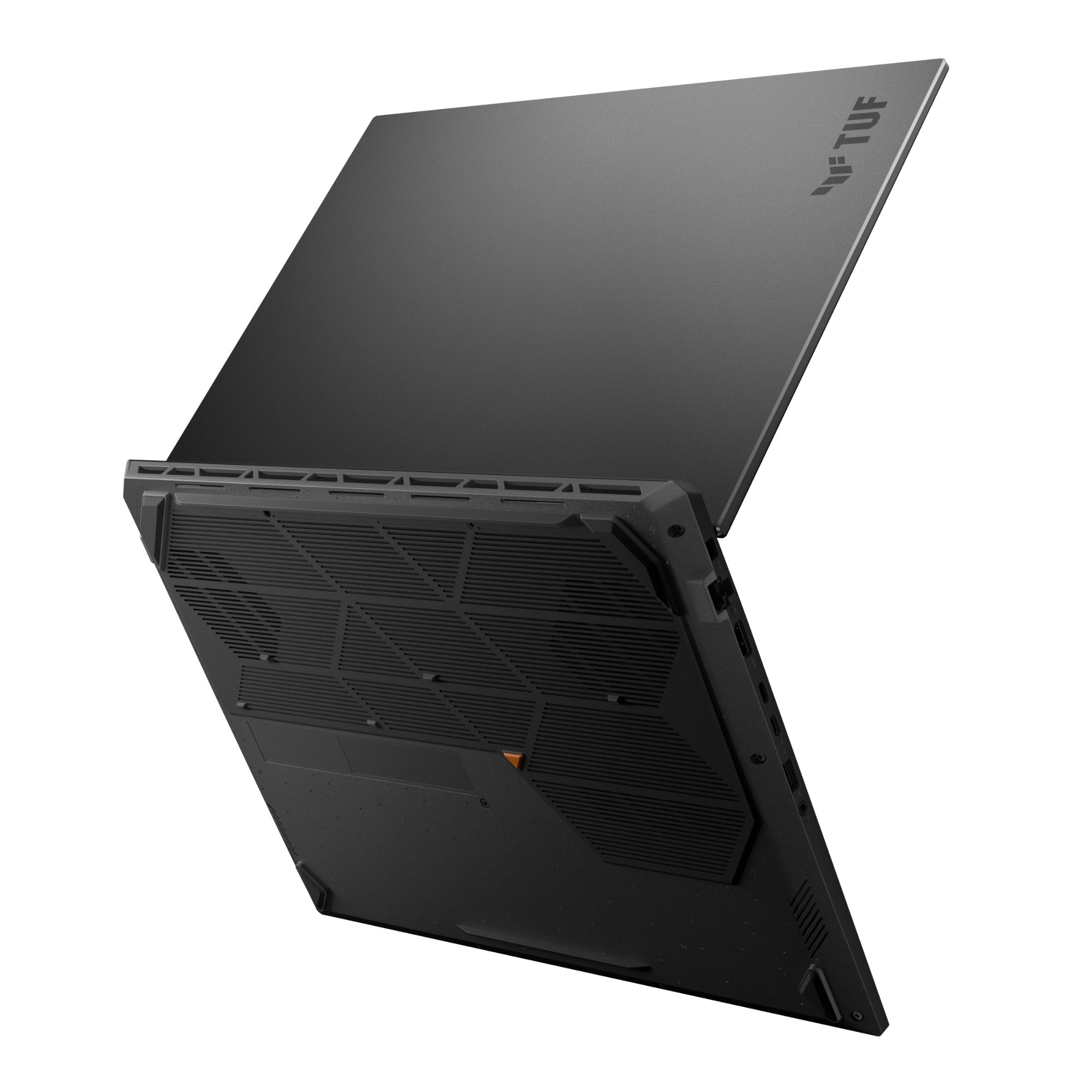
Asus TUF Gaming A16 (2024) TUF608UH-DRV045W (réf. 90NR0KS1-M003B0) : un 16" taillé pour jouer… sans oublier le quotidien
▸ Pour qui ? Pour celles et ceux qui veulent un PC gaming polyvalent (jeux + cours/boulot), avec un grand écran confortable et une vraie marge côté batterie.
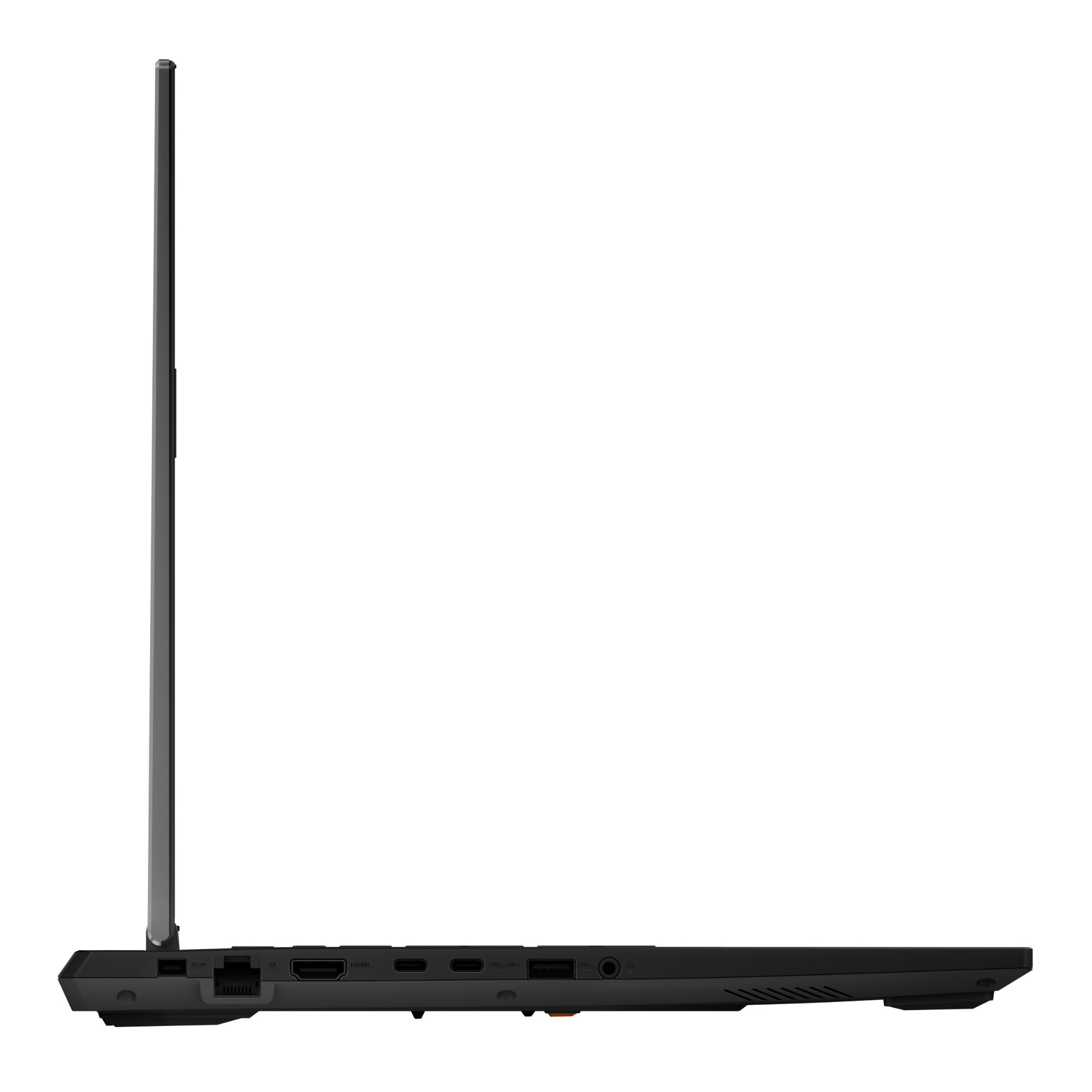
▸ Points forts : bel écran IPS lumineux et fluide (165 Hz), duo Ryzen 7 + RTX 5050 cohérent, grosse batterie 90 Wh, connectique complète (dont USB-C 4.0 + HDMI 2.1 + RJ45), indice de réparabilité 9,6/10.
▸ Limites / points faibles : gabarit et poids typiques d’un 16" gaming (moins “ultra-nomade”), pas de lecteur de carte, et PC livré sans système (prévoir installation/licence si besoin).
▸ Pourquoi ce prix (prix de lancement) ? Prix de lancement : 1 284,00 €. Le positionnement vise le milieu de gamme gaming : écran soigné (luminosité élevée + couleurs sRGB annoncées à 100%), GPU dédié, batterie généreuse et châssis annoncé MIL-STD-810H pour la robustesse, tout en restant plus accessible que les configs haut de gamme.
Dans la famille des PC portables Asus, ce TUF A16 joue la carte du “grand écran confortable + performances solides”, à comparer avec d’autres PC portables gamer si vous cherchez soit plus léger, soit plus puissant.

Ce TUF A16 90NR0KS1-M003B0 vise quel niveau de jeu, concrètement ?
Avec une RTX 5050 (GPU dédié) et un Ryzen 7 260, on est sur une configuration pensée pour jouer sérieusement en Full HD+ / “2,5K” selon les réglages. Dans la vraie vie, ça veut dire : très à l’aise sur les jeux compétitifs et les titres populaires, et capable d’attaquer des jeux plus gourmands en adaptant le niveau de détails. Si votre priorité est le “tout à fond” sur les gros AAA récents, il faut généralement viser une gamme au-dessus côté carte graphique.

L’écran 16" IPS 165 Hz : bon plan pour travailler autant que pour jouer ?
Oui, c’est même un des arguments les plus “qualitatifs” de cette fiche. La dalle IPS annonce une bonne couverture sRGB et une luminosité confortable, ce qui aide autant pour les jeux (image plus lisible) que pour la bureautique/études (moins de fatigue visuelle, surtout avec l’anti-reflets). Le 165 Hz est un vrai plus sur les jeux rapides (sensation de fluidité), mais ce n’est pas indispensable si vous jouez surtout en solo narratif.

Est-il vraiment “transportable” avec 2,2 kg et une batterie de 90 Wh ?
On est sur un 16" gaming : vous pouvez le transporter, mais ce n’est pas un petit ultraportable. Le point intéressant ici, c’est la batterie 90 Wh, plutôt généreuse pour cette catégorie : sur ce type de configuration, on peut généralement s’attendre à une meilleure endurance en cours/réunion/navigation que sur beaucoup de PC gaming plus “petite batterie” (à condition de ne pas jouer sur batterie). Pour un usage majoritairement sur bureau avec quelques déplacements, l’équilibre est pertinent.

RAM : peut-on viser 32 Go ou 64 Go plus tard ?
Oui, mais avec une nuance importante : les 2 emplacements mémoire sont occupés (2/2). La fiche indique une capacité maximale de 64 Go, donc l’évolution reste possible, mais elle passera typiquement par le remplacement des barrettes déjà en place (plutôt que l’ajout d’une barrette “en plus”). C’est une bonne nouvelle si vous faites du multitâche lourd, de la création ou des projets plus exigeants.

Connectique et confort au quotidien : bon “poste de bataille” à la maison ?
Plutôt oui : présence d’un HDMI 2.1 pour un écran externe/TV, d’un RJ45 (utile en jeu pour une connexion stable), et de deux ports USB-C dont un en USB-C 4.0. Ajoutez un clavier AZERTY avec rétroéclairage RGB (1 zone) et pavé numérique : pratique si vous tapez beaucoup ou si vous faites du tableur. Le point à noter : pas de lecteur de carte, donc si vous manipulez souvent des photos/vidéos depuis SD, prévoyez un adaptateur USB.

Sans OS : détail anodin ou vraie contrainte ?
Ici, le PC est indiqué sans système. Si vous êtes à l’aise, ce n’est pas dramatique : vous installez vous-même Windows ou une distribution Linux, puis vous faites les mises à jour et pilotes. En revanche, si vous voulez un PC “prêt à l’emploi” dès l’ouverture du carton, ou si vous devez intégrer le coût d’une licence, c’est un point à prendre en compte dans votre budget. La webcam 1080p avec infrarouge (Windows Hello) peut être un vrai confort… mais il faudra justement un OS compatible pour en profiter pleinement.

Alternatives “dans la même gamme” : lesquelles ont du sens selon votre priorité ?
Si vous hésitez, trois pistes ressortent bien selon votre objectif :
Budget serré : Asus TUF Gaming A16 (2024) TUF617NS-RN3003 (plus accessible, mais philosophie différente côté GPU).
Gaming plus abordable mais GPU Nvidia : Asus TUF Gaming A16 (2024) TUF607NU-RL109 (souvent un meilleur “ticket d’entrée” si vous jouez en restant raisonnable).
Monter d’un cran : Asus TUF Gaming A16 (2024) TUF608JPR-DRFQT052W (plus cher, mais clairement orienté performances et confort sur la durée).

Que retiennent les acheteurs : points forts et limites qui reviennent ?
Quand on regarde les retours disponibles, l’impression générale est très positive (note moyenne élevée sur plusieurs dizaines d’avis). Les points qui reviennent le plus : bon niveau de performances pour jouer, écran fluide apprécié, et un rapport qualité/prix jugé convaincant par pas mal de clients. Côté limites, les remarques sont plus ponctuelles : certains trouvent la webcam “juste correcte” (elle fait le travail, sans être un argument premium), et comme souvent en gaming, il faut accepter le format et l’encombrement. À noter aussi que certains avis sont signalés comme issus de programmes d’incitation : utile pour la tendance globale, mais à prendre avec un minimum de recul.
Positionnement du prix actuel (celui affiché juste au-dessus) :
en dessous d’environ 1 250 € : très bonne affaire pour un 16" IPS fluide avec RTX 5050 et grosse batterie.
entre environ 1 250 € et 1 550 € : prix cohérent si vous valorisez l’écran lumineux/fluide, la connectique (RJ45, HDMI 2.1, USB-C 4.0) et la 90 Wh pour l’usage mixte jeu + travail.
au-dessus d’environ 1 550 € : intéressant surtout si ce combo précis (16" + RTX 5050 + grande batterie + réparabilité élevée) colle exactement à votre usage ; sinon, comparez aussi des modèles plus puissants ou mieux équipés via les meilleurs PC portables gaming.
Conçu pour un usage gaming, ce PC portable de chez Asus s'adresse aux gamers en recherche de performances. Sa carte graphique (Nvidia RTX 5050 (mobile)) permet de profiter de nombreux jeux vidéo dans des conditions optimales.
Le PC Asus TUF Gaming A16 (2024) TUF608UH-DRV045W (Ryzen 7 / RTX 5050 / 16 Go / 512 Go) possède une taille d'écran de 16.0 pouces équivalent à une diagonale de 40,64 cm.
Asus utilise sur cette référence une dalle LCD - IPS avec un taux de rafraîchissement de 165 Hz. La luminosité maximale est annoncée à 400 cd/m². L'écran propose des angles de vision de 178°. Il supporte le profil colorimétrique sRGB à 100%.
Ce PC portable propose une résolution maximale de 2560 x 1600 pixels. Son ratio d'aspect est de 16/10 - il s'agit de la relation entre la largeur et la hauteur de l'image. Le PPI - ou pixels par pouce - représente quant à lui la densité de pixel sur un pouce, il se détermine avec la diagonale de l'écran et sa résolution. Sur ce PC la valeur est de 189ppp. Cet indicateur permet de déterminer la finesse d'affichage d'un écran, une valeur élevée permettra d'obtenir des textes plus fins.
Cet écran possède un revêtement antireflet / mat. Celui-ci permet d'atténuer le réfléchissement de la lumière pour un meilleur confort de lecture. C'est une fonctionnalité particulièrement appréciée si vous utilisez votre PC dans un environnement lumineux, dos à une fenêtre ou à l'extérieur, par exemple. Contrairement à un écran brillant où les couleurs sont souvent très vives avec des noirs plus profonds et des blancs plus lumineux, sur un écran mat les couleurs peuvent paraître moins intenses.
Ce PC portable ne propose pas d'écran tactile. Pour intéragir, seul l'usage du clavier et du touchpad (souris) est possible.
L'écran n'étant pas tactile, aucun stylet (actif ou passif) n'est compatible avec cet ordinateur.
Ce PC portable dispose d'une connectivité Wi-Fi 6E pour se connecter à votre Box Internet ou à votre routeur. Il propose également du Bluetooth 5.3 pour connecter une souris, un casque audio ou des écouteurs sans-fil.
Le clavier de l'ordinateur est adapté pour la France avec une configuration AZERTY. Les photos d'illustration proposées par Asus ne sont pas contractuelles au niveau de la configuration du clavier.
L'ordinateur propose un clavier à touches rétroéclairées, il s'agit d'une fonctionnalité particulièrement utile pour mettre en évidence les touches dans des environnements peu lumineux.
Ce PC portable dispose d'un pavé numérique sur la partie droite de son clavier. Comme sur une calculatrice, il permet d'accéder à la saisie des chiffres ou à des opérations mathématiques avec facilité pour gagner en productivité.
Cet ordinateur portable ne dispose pas de lecteur d'empreintes digitales. La webcam propose cependant la reconnaissance faciale par capteur infrarouge qui offre les mêmes fonctionnalités que la reconnaissance d'empreintes. Ce dispositif permet de s'authentifier avec rapidité sans avoir à saisir son mot de passe.
Le PC fixe de chez Asus propose 2 ports USB-C. Cependant, aucun des ports USB-C n'est compatible avec la technologie Thunderbolt proposée par Intel.
L'ordinateur est équipé d'un processeur AMD Ryzen 7 260 composé de 8 coeurs cadencés jusqu'à 5.10 GHz. Ce processeur est conçu avec une finesse de gravure en seulement 4 nm. Il propose une enveloppe thermique (TDP) de 45 W. AMD embarque sur cette puce une mémoire cache de 16 Mo. Cette référence fait partie de la gamme Zen 5 de chez AMD commercialisée depuis juillet 2024.
Ce PC portable dispose de 16 Go de mémoire vive (RAM). Elle est cadencée à une fréquence de fonctionnement de 5600 MHz et utilise la technologie DDR5. Pour une utilisation bureautique, Comparez-malin recommande une quantité de mémoire d'au minimum de 8 Go pour garantir le bon fonctionnement de l'appareil en multitâche. Pour un usage gaming, un minimum de 12 ou 16 Go est préconiser pour jouer dans de bonnes conditions.
Ce PC propose 2 emplacement(s) mémoire, dont 2 déjà occupé(s) par les 16 Go. Selon Asus, l'appareil supporte jusqu'à 64 Go de mémoire maximum.
Le Asus TUF Gaming A16 (2024) TUF608UH-DRV045W (Ryzen 7 / RTX 5050 / 16 Go / 512 Go) intègre la puce graphique dédiée Nvidia RTX 5050 (mobile). Elle dispose d'une capacité de mémoire vive de 8 Go.
Cet ordinateur propose une batterie 4 cellules d'une capacité de 90 Watt / heure. Le chargeur - livré avec le PC - délivre une puissance de 240 Watts. Malheureusement, à l'heure actuelle Asus ne communique aucune information officielle sur l'autonomie de la batterie. Ce PC ne déroge pas à la norme établie depuis plusieurs années, la batterie est intégrée et par conséquent, son accès est plus difficile pour l'utilisateur.
L'ordinateur est vendu par défaut sans aucun système d'exploitation. C'est à l'utilisateur d'installer par ses propres moyens le système et les applications de son choix en utilisant si nécessaire le support Asus pour les drivers.
Le PC est commercialisé depuis mai 2025 en France. À cette date, le prix relevé était de 1 284,00€.

Prix de référence (mai 2025) : 1 284,00€
Dans la même gamme
-

Asus TUF Gaming A16 (2024) TUF617NS-RN3003
- Écran 16.0" LCD - IPS (anti-reflets) 165 Hz
- Résolution Full HD 1920 x 1200 pixels (16/10)
- Sans système
- AMD Ryzen 7 7435HS (8 coeurs x 4.50 GHz)
- AMD Radeon RX 7600S (8 Go)
- 16 Go DDR5 - 4800 MHz
- 512 Go (SSD M.2 PCI-e 4.0)
-

Asus TUF Gaming A16 (2024) FA608WI-QT012W
- Écran 16.0" LCD - IPS (anti-reflets) 165 Hz
- Résolution QHD 2560 x 1600 pixels (16/10)
- Windows 11 Famille
- AMD Ryzen AI 9 HX 370 (12 coeurs x 5.10 GHz)
- Nvidia GeForce RTX 4070 (Mobile) (8 Go)
Version : 2225 MHz / 140 W - 32 Go LPDDR5X - 7500 MHz
- 1 To (SSD M.2 PCI-e 4.0)
-

Asus TUF Gaming A16 (2024) TUF607NU-RL109 (Ryzen 5 / RTX 4050 / 16 Go / 512 Go / Sans OS)
- Écran 16.0" LCD - IPS (anti-reflets) 144 Hz
- Résolution Full HD 1920 x 1200 pixels (16/10)
- Sans système
- AMD Ryzen 5 7535HS (6 coeurs x 4.55 GHz)
- Nvidia GeForce RTX 4050 (Mobile) (6 Go)
Version : 1681 MHz / 140 W - 16 Go DDR5 - 4800 MHz
- 512 Go (SSD M.2 PCI-e 3.0)
-

Asus TUF Gaming A16 (2024) TUF608PP-DRFQT049W (Ryzen 9 / RTX 5070 / 16 Go / 1 To)
- Écran 16.0" LCD - IPS (anti-reflets) 165 Hz
- Résolution QHD 2560 x 1600 pixels (16/10)
- Windows 11 Famille
- AMD Ryzen AI 9 HX 370 (12 coeurs x 5.10 GHz)
- Nvidia GeForce RTX 5070 (mobile) (8 Go)
- 16 Go LPDDR5X - 7500 MHz
- 1 To (SSD M.2 PCI-e 4.0)
-

Asus TUF Gaming A16 (2024) TUF608PP-DRQT041W (Ryzen 9 / RTX 5070 / 16 Go / 1 To)
- Écran 16.0" LCD - IPS (anti-reflets) 165 Hz
- Résolution QHD 2560 x 1600 pixels (16/10)
- Windows 11 Famille
- AMD Ryzen AI 9 HX 370 (12 coeurs x 5.10 GHz)
- Nvidia GeForce RTX 5070 (mobile) (8 Go)
- 16 Go LPDDR5X - 7500 MHz
- 1 To (SSD M.2 PCI-e 4.0)
-

Asus TUF Gaming TUF607VU-RL021W
- Écran 16.0" LCD - IPS (anti-reflets) 144 Hz
- Résolution Full HD 1920 x 1200 pixels (16/10)
- Windows 11 Famille
- Intel Core 5 210H (8 coeurs x 4.80 GHz)
- Nvidia GeForce RTX 4050 (Mobile) (6 Go)
- 16 Go DDR5 - 5600 MHz
- 1 To (SSD M.2 PCI-e 4.0)
-

Asus TUF Gaming A16 (2024) TUF608UM-DRQT051W (Ryzen 7 / RTX 5060 / 32 Go / 1 To)
- Écran 16.0" LCD - IPS (anti-reflets) 165 Hz
- Résolution QHD 2560 x 1600 pixels (16/10)
- Sans système
- AMD Ryzen 7 260 (8 coeurs x 5.10 GHz)
- Nvidia RTX 5060 (mobile) (8 Go)
Version : 2547 MHz / 115 W - 32 Go DDR5 - 5600 MHz
- 1 To (SSD M.2 PCI-e 4.0)
-

Asus TUF Gaming A16 (2024) TUF608UM-DRQT050W (Ryzen 7 / RTX 5060 / 16 Go / 512 Go)
- Écran 16.0" LCD - IPS (anti-reflets) 165 Hz
- Résolution QHD 2560 x 1600 pixels (16/10)
- Sans système
- AMD Ryzen 7 260 (8 coeurs x 5.10 GHz)
- Nvidia RTX 5060 (mobile) (8 Go)
Version : 2547 MHz / 115 W - 16 Go DDR5 - 5600 MHz
- 512 Go (SSD M.2 PCI-e 4.0)
-

Asus TUF Gaming A16 (2024) TUF608UM-DRFQT060W (Ryzen 7 / RTX 5060 / 16 Go / 512 Go)
- Écran 16.0" LCD - IPS (anti-reflets) 165 Hz
- Résolution QHD 2560 x 1600 pixels (16/10)
- Sans système
- AMD Ryzen 7 260 (8 coeurs x 5.10 GHz)
- Nvidia RTX 5060 (mobile) (8 Go)
Version : 2547 MHz / 115 W - 16 Go DDR5 - 5600 MHz
- 512 Go (SSD M.2 PCI-e 4.0)
-

Asus TUF Gaming A16 (2024) TUF608JMR-RV056W (Core i7 / RTX 5060 / 16 Go / 1 To)
- Écran 16.0" LCD - IPS (anti-reflets) 165 Hz
- Résolution Full HD 1920 x 1200 pixels (16/10)
- Windows 11 Famille
- Intel Core i7-14650HX (16 coeurs x 5.20 GHz)
- Nvidia RTX 5060 (mobile) (8 Go)
Version : 2547 MHz / 115 W - 16 Go DDR5 - 5600 MHz
- 1 To (SSD M.2 PCI-e 4.0)
-

Asus TUF Gaming A16 (2024) A16 608UH-RV053W (Ryzen 7 / RTX 5060 / 16 Go / 512 Go)
- Écran 16.0" LCD - IPS (anti-reflets) 165 Hz
- Résolution Full HD 1920 x 1200 pixels (16/10)
- Windows 11 Famille
- AMD Ryzen 7 260 (8 coeurs x 5.10 GHz)
- Nvidia RTX 5060 (mobile) (8 Go)
Version : 2547 MHz / 115 W - 16 Go DDR5 - 5600 MHz
- 512 Go (SSD M.2 PCI-e 4.0)
-

Asus TUF Gaming A16 (2024) TUF608JMR-RV095W (Core i7 / RTX 5060 / 32 Go / 512 Go)
- Écran 16.0" LCD - IPS (anti-reflets) 165 Hz
- Résolution Full HD 1920 x 1200 pixels (16/10)
- Windows 11 Famille
- Intel Core i7-14650HX (16 coeurs x 5.20 GHz)
- Nvidia RTX 5060 (mobile) (8 Go)
Version : 2547 MHz / 115 W - 32 Go DDR5 - 5600 MHz
- 512 Go (SSD M.2 PCI-e 4.0)
-

Asus TUF Gaming A16 (2024) TUF608PP-RV067W (Ryzen 9 / RTX 5070 / 32 Go / 1 To)
- Écran 16.0" LCD - IPS (anti-reflets) 165 Hz
- Résolution Full HD 1920 x 1200 pixels (16/10)
- Windows 11 Famille
- AMD Ryzen AI 9 HX 370 (12 coeurs x 5.10 GHz)
- Nvidia GeForce RTX 5070 (mobile) (8 Go)
- 32 Go LPDDR5X - 7500 MHz
- 1 To (SSD M.2 PCI-e 4.0)
-

Asus TUF Gaming A16 TUF608JH-RV073W
- Écran 16.0" LCD - IPS (anti-reflets) 165 Hz
- Résolution Full HD 1920 x 1080 pixels (16/9)
- Windows 11 Famille
- Intel Core i5-13450HX (10 coeurs x 4.50 GHz)
- Nvidia RTX 5050 (mobile) (8 Go)
- 16 Go DDR5 - 4800 MHz
- 512 Go (SSD M.2 PCI-e 4.0)
-

Asus TUF Gaming A16 (2024) TUF608UM-RV080W (Ryzen 7 / RTX 5060 / 16 Go / 512 Go)
- Écran 16.0" LCD - IPS (anti-reflets) 60 Hz
- Résolution Full HD 1920 x 1200 pixels (16/10)
- Windows 11 Famille
- AMD Ryzen 7 260 (8 coeurs x 5.10 GHz)
- Nvidia RTX 5060 (mobile) (8 Go)
- 16 Go DDR5 - 5600 MHz
- 512 Go (SSD M.2 PCI-e 4.0)
Suggestions
-

LG 32GX850A-B
- Écran gaming 32.0" OLED
- Résolution 4K UHD 3840 x 2160 pixels (16/9)
- 165 Hz
- 250 cd/m²
- Ajustable en hauteur. Inclinable. Rotatif horizontalement. Pivotant verticalement.
- AMD FreeSync Premium Pro, HDR10, Nvidia G-Sync, TÜV Rheinland Flicker Free, TÜV Rheinland Low Blue Light
-

LG 34U650A-B
- Écran bureautique / multimédia gaming 34.0" LCD - IPS
- Résolution QHD+ 3440 x 1440 pixels (21/9)
- 100 Hz
- 300 cd/m²
- Incurvé 3800 R
- Ajustable en hauteur. Inclinable. Rotatif horizontalement.
- HDR10, TÜV Rheinland Flicker Free, VESA DisplayHDR 400
-

Samsung Odyssey G8 G81SF LS27FG810SUXEN
- Écran gaming 27.0" OLED
- Résolution 4K UHD 3840 x 2160 pixels (16/9)
- 240 Hz
- 250 cd/m²
- Ajustable en hauteur. Inclinable. Rotatif horizontalement. Pivotant verticalement.
- AMD FreeSync Premium Pro, HDR10+ Gaming, Nvidia G-Sync, TÜV Rheinland Flicker Free, VESA DisplayHDR 400 True Black
-

Lenovo Legion 27Q-10 (68CFGACBEU)
- Écran gaming 26.5" OLED
- Résolution QHD 2560 x 1440 pixels (16/9)
- 280 Hz
- 250 cd/m²
- Ajustable en hauteur. Inclinable. Rotatif horizontalement. Pivotant verticalement.
- AMD FreeSync Premium Pro, Eyesafe Certified, TÜV Rheinland Low Blue Light, VESA Adaptive-Sync, VESA ClearMR
-

Lenovo Legion Pro 32UD-10 (69D0GACBEU)
- Écran gaming 31.5" OLED
- Résolution 4K UHD 3840 x 2160 pixels (16/9)
- 240 Hz
- 250 cd/m²
- Incurvé 800 R
- Ajustable en hauteur. Inclinable. Rotatif horizontalement.
- AMD FreeSync Premium Pro, Eyesafe Certified, HDR10, TÜV Rheinland Eye comfort, TÜV Rheinland Flicker Free
-

Samsung Odyssey G50SF QHD 180Hz
- Écran gaming 27.0" OLED
- Résolution QHD 2560 x 1440 pixels (16/9)
- 180 Hz
- 200 cd/m²
- Inclinable.
- AMD FreeSync, HDR10, Nvidia G-Sync, TÜV Rheinland Flicker Free
-

Asus ROG Strix XG27ACMEG-G Hatsune Miku Edition
- Écran gaming 27.0" Fast IPS
- Résolution QHD 2560 x 1440 pixels (16/9)
- 250 Hz
- 400 cd/m²
- Ajustable en hauteur. Inclinable. Rotatif horizontalement. Pivotant verticalement.
- AMD FreeSync Premium, HDR10, Nvidia G-Sync, TÜV Rheinland Flicker Free, TÜV Rheinland Low Blue Light
-

Samsung Odyssey G7 G75F LS40FG756EUXEN
- Écran gaming 40.0" VA
- Résolution 5K 5120 x 2160 pixels (21/9)
- 180 Hz
- 350 cd/m²
- Incurvé 1000 R
- Ajustable en hauteur. Inclinable. Rotatif horizontalement.
- AMD FreeSync Premium Pro, TÜV Rheinland Flicker Free, VESA DisplayHDR 600
-

Samsung Odyssey G60SF QHD 500Hz
- Écran gaming 27.0" OLED
- Résolution QHD 2560 x 1440 pixels (16/9)
- 500 Hz
- 300 cd/m²
- Ajustable en hauteur. Inclinable. Rotatif horizontalement. Pivotant verticalement.
- AMD FreeSync Premium Pro, Nvidia G-Sync, TÜV Rheinland Flicker Free, VESA DisplayHDR 500 True Black
-

LG 34GX900A-B
- Écran gaming 34.0" OLED
- Résolution QHD+ 3440 x 1440 pixels (21/9)
- 240 Hz
- 275 cd/m²
- Incurvé 800 R
- Ajustable en hauteur. Inclinable. Rotatif horizontalement.
- AMD FreeSync Premium Pro, HDR10, Nvidia G-Sync, TÜV Rheinland Flicker Free, VESA Adaptive-Sync
| Informations générales | |
|---|---|
| Fabricant | Asus |
| Référence | 90NR0KS1-M003B0 |
| Prix de référence | 1 284,00€ |
| Date | 23/05/2025 |
| EAN | 4711636018463 |
| Indice de réparabilité | 9.60 / 10 |
| Format | PC portable |
| Usage principal | Gaming |
| Certifications | MIL-STD-810H Touche Copilot |
| Caractéristiques écran | |
| Taille | 16.0" (40,64 cm) |
| Résolution | 2560 x 1600 pixels |
| Ratio | 16/10 |
| PPI | 189 ppp |
| Tactile | Non |
| Type de dalle | LCD - IPS |
| Anti-reflets | Oui |
| Luminosité | 400 cd/m² |
| Angle de vue | 178° |
| Fréquence | 165 Hz |
| Contraste | 1000:1 |
| Delta E | - |
| SRGB | 100% |
| DCI-P3 | - |
| HDR | - |
| Anti-rayures | Non |
| Capteurs | |
| Capteur de luminosité | Oui |
| Capteur de proximité | Non |
| Accéléromètre | Non |
| Gyroscope | Non |
| Stylet | |
| Compatible | Non |
| Système d'exploitation | |
| Système | Aucun / sans OS |
| Réseaux sans fil | |
| Wi-Fi | Wi-Fi 6E (802.11ax-6e) |
| Bluetooth | 5.3 |
| GPS | Non |
| 4G | Non |
| 5G | Non |
| Webcam / APN | |
| Webcam | 2.0 MPx HD 1080p |
| Infrarouge (Windows Hello) | Oui |
| Cache | Non |
| Appareil photo | Non |
| Multimédia | |
| Haut-parleurs | Haut-parleurs stéréo (2W) |
| Fabricant | - |
| Certification(s) | Dolby Atmos / Hi-Res Audio |
| Wireless Display (Widi) | Non |
| Miracast | Non |
| Airplay | Non |
| NFC | Non |
| Infrarouge | Non |
| Conception | |
| Couleur(s) | Noir |
| Composition | Plastique |
| Dimensions | 354 x 269 x 17.9 - 25.7 mm |
| Poids | 2.2 kg |
| Processeur | |
|---|---|
| Processeur | AMD Ryzen 7 260 |
| Fréquence |
|
| Gamme | Zen 5 (2024) |
| Gravure | 4 nm |
| PDT max. | 45 W |
| Cache | 16 Mo |
| 64 bits | Oui |
| Puce graphique | |
| Intégrée | AMD Radeon 780M 2700 MHz |
| Dédiée | Nvidia RTX 5050 (mobile) Mémoire vive : 8 Go |
| Disque dur / Mémoire | |
| Stockage | 512 Go
|
| Mémoire (RAM) | 16 Go (DDR5) 5600 MHz |
| Slots mémoire | 2 / 2 |
| Capacité max. | 64 Go |
| Connectique | |
| USB |
|
| Lecteur de carte | Non |
| HDMI | 1 x HDMI 2.1 |
| DisplayPort | Non |
| VGA | Non |
| Ethernet | 1 x RJ45 (1 Gbits/s) |
| Firewire | Non |
| Port série | Non |
| Graveur DVD | Non |
| Smart Card | Non |
| Connecteur pour dock | Non |
| E/S audio (Jack) | Prise casque • |
| Clavier | |
| Configuration | AZERTY (FR) |
| Rétroéclairé | Oui |
| Touchpad | Oui |
| Pavé numérique | Oui |
| Trackpoint | Non |
| Batterie / Autonomie | |
| Puissance | 240 W |
| Capacité mAh | - |
| Capacité Wh | 90 Wh |
| Cellules | 4 cel. |
| Amovible | Non |
| Induction | Non |
| Autonomie fabricant | - |
| Temps de charge | - |
| Sécurité | |
| Lecteur d'empreintes | Non |
| Verrou Kensington | Oui |
| Puce TPM | Oui |
| Accessoires | |
| Inclus |
|
| Optionnel | - |
Prix de référence (mai 2025) : 1 284,00€
Dans la même gamme
-

Asus TUF Gaming A16 (2024) TUF617NS-RN3003
- Écran 16.0" LCD - IPS (anti-reflets) 165 Hz
- Résolution Full HD 1920 x 1200 pixels (16/10)
- Sans système
- AMD Ryzen 7 7435HS (8 coeurs x 4.50 GHz)
- AMD Radeon RX 7600S (8 Go)
- 16 Go DDR5 - 4800 MHz
- 512 Go (SSD M.2 PCI-e 4.0)
-

Asus TUF Gaming A16 (2024) FA608WI-QT012W
- Écran 16.0" LCD - IPS (anti-reflets) 165 Hz
- Résolution QHD 2560 x 1600 pixels (16/10)
- Windows 11 Famille
- AMD Ryzen AI 9 HX 370 (12 coeurs x 5.10 GHz)
- Nvidia GeForce RTX 4070 (Mobile) (8 Go)
Version : 2225 MHz / 140 W - 32 Go LPDDR5X - 7500 MHz
- 1 To (SSD M.2 PCI-e 4.0)
-

Asus TUF Gaming A16 (2024) TUF607NU-RL109 (Ryzen 5 / RTX 4050 / 16 Go / 512 Go / Sans OS)
- Écran 16.0" LCD - IPS (anti-reflets) 144 Hz
- Résolution Full HD 1920 x 1200 pixels (16/10)
- Sans système
- AMD Ryzen 5 7535HS (6 coeurs x 4.55 GHz)
- Nvidia GeForce RTX 4050 (Mobile) (6 Go)
Version : 1681 MHz / 140 W - 16 Go DDR5 - 4800 MHz
- 512 Go (SSD M.2 PCI-e 3.0)
-

Asus TUF Gaming A16 (2024) TUF608PP-DRFQT049W (Ryzen 9 / RTX 5070 / 16 Go / 1 To)
- Écran 16.0" LCD - IPS (anti-reflets) 165 Hz
- Résolution QHD 2560 x 1600 pixels (16/10)
- Windows 11 Famille
- AMD Ryzen AI 9 HX 370 (12 coeurs x 5.10 GHz)
- Nvidia GeForce RTX 5070 (mobile) (8 Go)
- 16 Go LPDDR5X - 7500 MHz
- 1 To (SSD M.2 PCI-e 4.0)
-

Asus TUF Gaming A16 (2024) TUF608PP-DRQT041W (Ryzen 9 / RTX 5070 / 16 Go / 1 To)
- Écran 16.0" LCD - IPS (anti-reflets) 165 Hz
- Résolution QHD 2560 x 1600 pixels (16/10)
- Windows 11 Famille
- AMD Ryzen AI 9 HX 370 (12 coeurs x 5.10 GHz)
- Nvidia GeForce RTX 5070 (mobile) (8 Go)
- 16 Go LPDDR5X - 7500 MHz
- 1 To (SSD M.2 PCI-e 4.0)
-

Asus TUF Gaming TUF607VU-RL021W
- Écran 16.0" LCD - IPS (anti-reflets) 144 Hz
- Résolution Full HD 1920 x 1200 pixels (16/10)
- Windows 11 Famille
- Intel Core 5 210H (8 coeurs x 4.80 GHz)
- Nvidia GeForce RTX 4050 (Mobile) (6 Go)
- 16 Go DDR5 - 5600 MHz
- 1 To (SSD M.2 PCI-e 4.0)
-

Asus TUF Gaming A16 (2024) TUF608UM-DRQT051W (Ryzen 7 / RTX 5060 / 32 Go / 1 To)
- Écran 16.0" LCD - IPS (anti-reflets) 165 Hz
- Résolution QHD 2560 x 1600 pixels (16/10)
- Sans système
- AMD Ryzen 7 260 (8 coeurs x 5.10 GHz)
- Nvidia RTX 5060 (mobile) (8 Go)
Version : 2547 MHz / 115 W - 32 Go DDR5 - 5600 MHz
- 1 To (SSD M.2 PCI-e 4.0)
-

Asus TUF Gaming A16 (2024) TUF608UM-DRQT050W (Ryzen 7 / RTX 5060 / 16 Go / 512 Go)
- Écran 16.0" LCD - IPS (anti-reflets) 165 Hz
- Résolution QHD 2560 x 1600 pixels (16/10)
- Sans système
- AMD Ryzen 7 260 (8 coeurs x 5.10 GHz)
- Nvidia RTX 5060 (mobile) (8 Go)
Version : 2547 MHz / 115 W - 16 Go DDR5 - 5600 MHz
- 512 Go (SSD M.2 PCI-e 4.0)
-

Asus TUF Gaming A16 (2024) TUF608UM-DRFQT060W (Ryzen 7 / RTX 5060 / 16 Go / 512 Go)
- Écran 16.0" LCD - IPS (anti-reflets) 165 Hz
- Résolution QHD 2560 x 1600 pixels (16/10)
- Sans système
- AMD Ryzen 7 260 (8 coeurs x 5.10 GHz)
- Nvidia RTX 5060 (mobile) (8 Go)
Version : 2547 MHz / 115 W - 16 Go DDR5 - 5600 MHz
- 512 Go (SSD M.2 PCI-e 4.0)
-

Asus TUF Gaming A16 (2024) TUF608JMR-RV056W (Core i7 / RTX 5060 / 16 Go / 1 To)
- Écran 16.0" LCD - IPS (anti-reflets) 165 Hz
- Résolution Full HD 1920 x 1200 pixels (16/10)
- Windows 11 Famille
- Intel Core i7-14650HX (16 coeurs x 5.20 GHz)
- Nvidia RTX 5060 (mobile) (8 Go)
Version : 2547 MHz / 115 W - 16 Go DDR5 - 5600 MHz
- 1 To (SSD M.2 PCI-e 4.0)
-

Asus TUF Gaming A16 (2024) A16 608UH-RV053W (Ryzen 7 / RTX 5060 / 16 Go / 512 Go)
- Écran 16.0" LCD - IPS (anti-reflets) 165 Hz
- Résolution Full HD 1920 x 1200 pixels (16/10)
- Windows 11 Famille
- AMD Ryzen 7 260 (8 coeurs x 5.10 GHz)
- Nvidia RTX 5060 (mobile) (8 Go)
Version : 2547 MHz / 115 W - 16 Go DDR5 - 5600 MHz
- 512 Go (SSD M.2 PCI-e 4.0)
-

Asus TUF Gaming A16 (2024) TUF608JMR-RV095W (Core i7 / RTX 5060 / 32 Go / 512 Go)
- Écran 16.0" LCD - IPS (anti-reflets) 165 Hz
- Résolution Full HD 1920 x 1200 pixels (16/10)
- Windows 11 Famille
- Intel Core i7-14650HX (16 coeurs x 5.20 GHz)
- Nvidia RTX 5060 (mobile) (8 Go)
Version : 2547 MHz / 115 W - 32 Go DDR5 - 5600 MHz
- 512 Go (SSD M.2 PCI-e 4.0)
-

Asus TUF Gaming A16 (2024) TUF608PP-RV067W (Ryzen 9 / RTX 5070 / 32 Go / 1 To)
- Écran 16.0" LCD - IPS (anti-reflets) 165 Hz
- Résolution Full HD 1920 x 1200 pixels (16/10)
- Windows 11 Famille
- AMD Ryzen AI 9 HX 370 (12 coeurs x 5.10 GHz)
- Nvidia GeForce RTX 5070 (mobile) (8 Go)
- 32 Go LPDDR5X - 7500 MHz
- 1 To (SSD M.2 PCI-e 4.0)
-

Asus TUF Gaming A16 TUF608JH-RV073W
- Écran 16.0" LCD - IPS (anti-reflets) 165 Hz
- Résolution Full HD 1920 x 1080 pixels (16/9)
- Windows 11 Famille
- Intel Core i5-13450HX (10 coeurs x 4.50 GHz)
- Nvidia RTX 5050 (mobile) (8 Go)
- 16 Go DDR5 - 4800 MHz
- 512 Go (SSD M.2 PCI-e 4.0)
-

Asus TUF Gaming A16 (2024) TUF608UM-RV080W (Ryzen 7 / RTX 5060 / 16 Go / 512 Go)
- Écran 16.0" LCD - IPS (anti-reflets) 60 Hz
- Résolution Full HD 1920 x 1200 pixels (16/10)
- Windows 11 Famille
- AMD Ryzen 7 260 (8 coeurs x 5.10 GHz)
- Nvidia RTX 5060 (mobile) (8 Go)
- 16 Go DDR5 - 5600 MHz
- 512 Go (SSD M.2 PCI-e 4.0)
Suggestions
-

LG 32GX850A-B
- Écran gaming 32.0" OLED
- Résolution 4K UHD 3840 x 2160 pixels (16/9)
- 165 Hz
- 250 cd/m²
- Ajustable en hauteur. Inclinable. Rotatif horizontalement. Pivotant verticalement.
- AMD FreeSync Premium Pro, HDR10, Nvidia G-Sync, TÜV Rheinland Flicker Free, TÜV Rheinland Low Blue Light
-

LG 34U650A-B
- Écran bureautique / multimédia gaming 34.0" LCD - IPS
- Résolution QHD+ 3440 x 1440 pixels (21/9)
- 100 Hz
- 300 cd/m²
- Incurvé 3800 R
- Ajustable en hauteur. Inclinable. Rotatif horizontalement.
- HDR10, TÜV Rheinland Flicker Free, VESA DisplayHDR 400
-

Samsung Odyssey G8 G81SF LS27FG810SUXEN
- Écran gaming 27.0" OLED
- Résolution 4K UHD 3840 x 2160 pixels (16/9)
- 240 Hz
- 250 cd/m²
- Ajustable en hauteur. Inclinable. Rotatif horizontalement. Pivotant verticalement.
- AMD FreeSync Premium Pro, HDR10+ Gaming, Nvidia G-Sync, TÜV Rheinland Flicker Free, VESA DisplayHDR 400 True Black
-

Lenovo Legion 27Q-10 (68CFGACBEU)
- Écran gaming 26.5" OLED
- Résolution QHD 2560 x 1440 pixels (16/9)
- 280 Hz
- 250 cd/m²
- Ajustable en hauteur. Inclinable. Rotatif horizontalement. Pivotant verticalement.
- AMD FreeSync Premium Pro, Eyesafe Certified, TÜV Rheinland Low Blue Light, VESA Adaptive-Sync, VESA ClearMR
-

Lenovo Legion Pro 32UD-10 (69D0GACBEU)
- Écran gaming 31.5" OLED
- Résolution 4K UHD 3840 x 2160 pixels (16/9)
- 240 Hz
- 250 cd/m²
- Incurvé 800 R
- Ajustable en hauteur. Inclinable. Rotatif horizontalement.
- AMD FreeSync Premium Pro, Eyesafe Certified, HDR10, TÜV Rheinland Eye comfort, TÜV Rheinland Flicker Free
-

Samsung Odyssey G50SF QHD 180Hz
- Écran gaming 27.0" OLED
- Résolution QHD 2560 x 1440 pixels (16/9)
- 180 Hz
- 200 cd/m²
- Inclinable.
- AMD FreeSync, HDR10, Nvidia G-Sync, TÜV Rheinland Flicker Free
-

Asus ROG Strix XG27ACMEG-G Hatsune Miku Edition
- Écran gaming 27.0" Fast IPS
- Résolution QHD 2560 x 1440 pixels (16/9)
- 250 Hz
- 400 cd/m²
- Ajustable en hauteur. Inclinable. Rotatif horizontalement. Pivotant verticalement.
- AMD FreeSync Premium, HDR10, Nvidia G-Sync, TÜV Rheinland Flicker Free, TÜV Rheinland Low Blue Light
-

Samsung Odyssey G7 G75F LS40FG756EUXEN
- Écran gaming 40.0" VA
- Résolution 5K 5120 x 2160 pixels (21/9)
- 180 Hz
- 350 cd/m²
- Incurvé 1000 R
- Ajustable en hauteur. Inclinable. Rotatif horizontalement.
- AMD FreeSync Premium Pro, TÜV Rheinland Flicker Free, VESA DisplayHDR 600
-

Samsung Odyssey G60SF QHD 500Hz
- Écran gaming 27.0" OLED
- Résolution QHD 2560 x 1440 pixels (16/9)
- 500 Hz
- 300 cd/m²
- Ajustable en hauteur. Inclinable. Rotatif horizontalement. Pivotant verticalement.
- AMD FreeSync Premium Pro, Nvidia G-Sync, TÜV Rheinland Flicker Free, VESA DisplayHDR 500 True Black
-

LG 34GX900A-B
- Écran gaming 34.0" OLED
- Résolution QHD+ 3440 x 1440 pixels (21/9)
- 240 Hz
- 275 cd/m²
- Incurvé 800 R
- Ajustable en hauteur. Inclinable. Rotatif horizontalement.
- AMD FreeSync Premium Pro, HDR10, Nvidia G-Sync, TÜV Rheinland Flicker Free, VESA Adaptive-Sync
Remarque
Les informations techniques présentes sur cette fiche sont fournies à titre indicatif. Elles sont compilées à partir de données techniques mises à disposition librement (site du fabricant, revendeurs, PDF du produit, etc.). Nous mettons tout en œuvre pour vous apporter les indications les plus justes. Cependant, nous ne pouvons garantir qu'il n'y ait aucune erreur. Il appartient donc à chacun de vérifier les informations avant son achat, soit en prenant contact avec le site marchand, ou en se référant au site du constructeur. Si vous constatez une erreur sur cette fiche, merci de nous le signaler afin que nous puissions corriger ces informations.
Dans la même gamme
-

Asus TUF Gaming A16 (2024) TUF617NS-RN3003
- Écran 16.0" LCD - IPS (anti-reflets) 165 Hz
- Résolution Full HD 1920 x 1200 pixels (16/10)
- Sans système
- AMD Ryzen 7 7435HS (8 coeurs x 4.50 GHz)
- AMD Radeon RX 7600S (8 Go)
- 16 Go DDR5 - 4800 MHz
- 512 Go (SSD M.2 PCI-e 4.0)
-

Asus TUF Gaming A16 (2024) FA608WI-QT012W
- Écran 16.0" LCD - IPS (anti-reflets) 165 Hz
- Résolution QHD 2560 x 1600 pixels (16/10)
- Windows 11 Famille
- AMD Ryzen AI 9 HX 370 (12 coeurs x 5.10 GHz)
- Nvidia GeForce RTX 4070 (Mobile) (8 Go)
Version : 2225 MHz / 140 W - 32 Go LPDDR5X - 7500 MHz
- 1 To (SSD M.2 PCI-e 4.0)
-

Asus TUF Gaming A16 (2024) TUF607NU-RL109 (Ryzen 5 / RTX 4050 / 16 Go / 512 Go / Sans OS)
- Écran 16.0" LCD - IPS (anti-reflets) 144 Hz
- Résolution Full HD 1920 x 1200 pixels (16/10)
- Sans système
- AMD Ryzen 5 7535HS (6 coeurs x 4.55 GHz)
- Nvidia GeForce RTX 4050 (Mobile) (6 Go)
Version : 1681 MHz / 140 W - 16 Go DDR5 - 4800 MHz
- 512 Go (SSD M.2 PCI-e 3.0)
-

Asus TUF Gaming A16 (2024) TUF608PP-DRFQT049W (Ryzen 9 / RTX 5070 / 16 Go / 1 To)
- Écran 16.0" LCD - IPS (anti-reflets) 165 Hz
- Résolution QHD 2560 x 1600 pixels (16/10)
- Windows 11 Famille
- AMD Ryzen AI 9 HX 370 (12 coeurs x 5.10 GHz)
- Nvidia GeForce RTX 5070 (mobile) (8 Go)
- 16 Go LPDDR5X - 7500 MHz
- 1 To (SSD M.2 PCI-e 4.0)
-

Asus TUF Gaming A16 (2024) TUF608PP-DRQT041W (Ryzen 9 / RTX 5070 / 16 Go / 1 To)
- Écran 16.0" LCD - IPS (anti-reflets) 165 Hz
- Résolution QHD 2560 x 1600 pixels (16/10)
- Windows 11 Famille
- AMD Ryzen AI 9 HX 370 (12 coeurs x 5.10 GHz)
- Nvidia GeForce RTX 5070 (mobile) (8 Go)
- 16 Go LPDDR5X - 7500 MHz
- 1 To (SSD M.2 PCI-e 4.0)
-

Asus TUF Gaming TUF607VU-RL021W
- Écran 16.0" LCD - IPS (anti-reflets) 144 Hz
- Résolution Full HD 1920 x 1200 pixels (16/10)
- Windows 11 Famille
- Intel Core 5 210H (8 coeurs x 4.80 GHz)
- Nvidia GeForce RTX 4050 (Mobile) (6 Go)
- 16 Go DDR5 - 5600 MHz
- 1 To (SSD M.2 PCI-e 4.0)
-

Asus TUF Gaming A16 (2024) TUF608UM-DRQT051W (Ryzen 7 / RTX 5060 / 32 Go / 1 To)
- Écran 16.0" LCD - IPS (anti-reflets) 165 Hz
- Résolution QHD 2560 x 1600 pixels (16/10)
- Sans système
- AMD Ryzen 7 260 (8 coeurs x 5.10 GHz)
- Nvidia RTX 5060 (mobile) (8 Go)
Version : 2547 MHz / 115 W - 32 Go DDR5 - 5600 MHz
- 1 To (SSD M.2 PCI-e 4.0)
-

Asus TUF Gaming A16 (2024) TUF608UM-DRQT050W (Ryzen 7 / RTX 5060 / 16 Go / 512 Go)
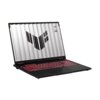
- Écran 16.0" LCD - IPS (anti-reflets) 165 Hz
- Résolution QHD 2560 x 1600 pixels (16/10)
- Sans système
- AMD Ryzen 7 260 (8 coeurs x 5.10 GHz)
- Nvidia RTX 5060 (mobile) (8 Go)
Version : 2547 MHz / 115 W - 16 Go DDR5 - 5600 MHz
- 512 Go (SSD M.2 PCI-e 4.0)
-

Asus TUF Gaming A16 (2024) TUF608UM-DRFQT060W (Ryzen 7 / RTX 5060 / 16 Go / 512 Go)
- Écran 16.0" LCD - IPS (anti-reflets) 165 Hz
- Résolution QHD 2560 x 1600 pixels (16/10)
- Sans système
- AMD Ryzen 7 260 (8 coeurs x 5.10 GHz)
- Nvidia RTX 5060 (mobile) (8 Go)
Version : 2547 MHz / 115 W - 16 Go DDR5 - 5600 MHz
- 512 Go (SSD M.2 PCI-e 4.0)
-

Asus TUF Gaming A16 (2024) TUF608JMR-RV056W (Core i7 / RTX 5060 / 16 Go / 1 To)
- Écran 16.0" LCD - IPS (anti-reflets) 165 Hz
- Résolution Full HD 1920 x 1200 pixels (16/10)
- Windows 11 Famille
- Intel Core i7-14650HX (16 coeurs x 5.20 GHz)
- Nvidia RTX 5060 (mobile) (8 Go)
Version : 2547 MHz / 115 W - 16 Go DDR5 - 5600 MHz
- 1 To (SSD M.2 PCI-e 4.0)
-

Asus TUF Gaming A16 (2024) A16 608UH-RV053W (Ryzen 7 / RTX 5060 / 16 Go / 512 Go)
- Écran 16.0" LCD - IPS (anti-reflets) 165 Hz
- Résolution Full HD 1920 x 1200 pixels (16/10)
- Windows 11 Famille
- AMD Ryzen 7 260 (8 coeurs x 5.10 GHz)
- Nvidia RTX 5060 (mobile) (8 Go)
Version : 2547 MHz / 115 W - 16 Go DDR5 - 5600 MHz
- 512 Go (SSD M.2 PCI-e 4.0)
-

Asus TUF Gaming A16 (2024) TUF608JMR-RV095W (Core i7 / RTX 5060 / 32 Go / 512 Go)
- Écran 16.0" LCD - IPS (anti-reflets) 165 Hz
- Résolution Full HD 1920 x 1200 pixels (16/10)
- Windows 11 Famille
- Intel Core i7-14650HX (16 coeurs x 5.20 GHz)
- Nvidia RTX 5060 (mobile) (8 Go)
Version : 2547 MHz / 115 W - 32 Go DDR5 - 5600 MHz
- 512 Go (SSD M.2 PCI-e 4.0)
-

Asus TUF Gaming A16 (2024) TUF608PP-RV067W (Ryzen 9 / RTX 5070 / 32 Go / 1 To)
- Écran 16.0" LCD - IPS (anti-reflets) 165 Hz
- Résolution Full HD 1920 x 1200 pixels (16/10)
- Windows 11 Famille
- AMD Ryzen AI 9 HX 370 (12 coeurs x 5.10 GHz)
- Nvidia GeForce RTX 5070 (mobile) (8 Go)
- 32 Go LPDDR5X - 7500 MHz
- 1 To (SSD M.2 PCI-e 4.0)
-

Asus TUF Gaming A16 TUF608JH-RV073W
- Écran 16.0" LCD - IPS (anti-reflets) 165 Hz
- Résolution Full HD 1920 x 1080 pixels (16/9)
- Windows 11 Famille
- Intel Core i5-13450HX (10 coeurs x 4.50 GHz)
- Nvidia RTX 5050 (mobile) (8 Go)
- 16 Go DDR5 - 4800 MHz
- 512 Go (SSD M.2 PCI-e 4.0)
-

Asus TUF Gaming A16 (2024) TUF608UM-RV080W (Ryzen 7 / RTX 5060 / 16 Go / 512 Go)
- Écran 16.0" LCD - IPS (anti-reflets) 60 Hz
- Résolution Full HD 1920 x 1200 pixels (16/10)
- Windows 11 Famille
- AMD Ryzen 7 260 (8 coeurs x 5.10 GHz)
- Nvidia RTX 5060 (mobile) (8 Go)
- 16 Go DDR5 - 5600 MHz
- 512 Go (SSD M.2 PCI-e 4.0)
Suggestions
-

LG 32GX850A-B
- Écran gaming 32.0" OLED
- Résolution 4K UHD 3840 x 2160 pixels (16/9)
- 165 Hz
- 250 cd/m²
- Ajustable en hauteur. Inclinable. Rotatif horizontalement. Pivotant verticalement.
- AMD FreeSync Premium Pro, HDR10, Nvidia G-Sync, TÜV Rheinland Flicker Free, TÜV Rheinland Low Blue Light
-

LG 34U650A-B
- Écran bureautique / multimédia gaming 34.0" LCD - IPS
- Résolution QHD+ 3440 x 1440 pixels (21/9)
- 100 Hz
- 300 cd/m²
- Incurvé 3800 R
- Ajustable en hauteur. Inclinable. Rotatif horizontalement.
- HDR10, TÜV Rheinland Flicker Free, VESA DisplayHDR 400
-

Samsung Odyssey G8 G81SF LS27FG810SUXEN
- Écran gaming 27.0" OLED
- Résolution 4K UHD 3840 x 2160 pixels (16/9)
- 240 Hz
- 250 cd/m²
- Ajustable en hauteur. Inclinable. Rotatif horizontalement. Pivotant verticalement.
- AMD FreeSync Premium Pro, HDR10+ Gaming, Nvidia G-Sync, TÜV Rheinland Flicker Free, VESA DisplayHDR 400 True Black
-

Lenovo Legion 27Q-10 (68CFGACBEU)
- Écran gaming 26.5" OLED
- Résolution QHD 2560 x 1440 pixels (16/9)
- 280 Hz
- 250 cd/m²
- Ajustable en hauteur. Inclinable. Rotatif horizontalement. Pivotant verticalement.
- AMD FreeSync Premium Pro, Eyesafe Certified, TÜV Rheinland Low Blue Light, VESA Adaptive-Sync, VESA ClearMR
-

Lenovo Legion Pro 32UD-10 (69D0GACBEU)
- Écran gaming 31.5" OLED
- Résolution 4K UHD 3840 x 2160 pixels (16/9)
- 240 Hz
- 250 cd/m²
- Incurvé 800 R
- Ajustable en hauteur. Inclinable. Rotatif horizontalement.
- AMD FreeSync Premium Pro, Eyesafe Certified, HDR10, TÜV Rheinland Eye comfort, TÜV Rheinland Flicker Free
-

Samsung Odyssey G50SF QHD 180Hz
- Écran gaming 27.0" OLED
- Résolution QHD 2560 x 1440 pixels (16/9)
- 180 Hz
- 200 cd/m²
- Inclinable.
- AMD FreeSync, HDR10, Nvidia G-Sync, TÜV Rheinland Flicker Free
-

Asus ROG Strix XG27ACMEG-G Hatsune Miku Edition
- Écran gaming 27.0" Fast IPS
- Résolution QHD 2560 x 1440 pixels (16/9)
- 250 Hz
- 400 cd/m²
- Ajustable en hauteur. Inclinable. Rotatif horizontalement. Pivotant verticalement.
- AMD FreeSync Premium, HDR10, Nvidia G-Sync, TÜV Rheinland Flicker Free, TÜV Rheinland Low Blue Light
-

Samsung Odyssey G7 G75F LS40FG756EUXEN
- Écran gaming 40.0" VA
- Résolution 5K 5120 x 2160 pixels (21/9)
- 180 Hz
- 350 cd/m²
- Incurvé 1000 R
- Ajustable en hauteur. Inclinable. Rotatif horizontalement.
- AMD FreeSync Premium Pro, TÜV Rheinland Flicker Free, VESA DisplayHDR 600
-

Samsung Odyssey G60SF QHD 500Hz
- Écran gaming 27.0" OLED
- Résolution QHD 2560 x 1440 pixels (16/9)
- 500 Hz
- 300 cd/m²
- Ajustable en hauteur. Inclinable. Rotatif horizontalement. Pivotant verticalement.
- AMD FreeSync Premium Pro, Nvidia G-Sync, TÜV Rheinland Flicker Free, VESA DisplayHDR 500 True Black
-

LG 34GX900A-B
- Écran gaming 34.0" OLED
- Résolution QHD+ 3440 x 1440 pixels (21/9)
- 240 Hz
- 275 cd/m²
- Incurvé 800 R
- Ajustable en hauteur. Inclinable. Rotatif horizontalement.
- AMD FreeSync Premium Pro, HDR10, Nvidia G-Sync, TÜV Rheinland Flicker Free, VESA Adaptive-Sync
Commentaires
Une question sur cette référence ou besoin d'aide pour faire votre choix ?
Laissez-nous un commentaire, nous vous répondrons dès que possible :
- Vous n'avez pas besoin d'être inscrit pour commenter
- Le langage texto (SMS) est formellement interdit, limitez l'usage des abréviations
- Les commentaires publicitaires seront supprimés
- Pour signaler une faute ou une erreur sur les caractéristiques de ce produit, contactez-nous par mail